Last Updated: July 28, 2026
The products referenced on this page carry a combined 148+ verified Amazon customer ratings.
Finding the right what size solar panel you need to charge your gear while cam comes down to matching the features to how you will actually use it.
The Short Answer
For a solo camper charging a phone, a headlamp, a GPS or camera, and a small USB power bank, a 20-30W folding panel keeps you topped up over a normal sunny day. If you are refilling a power station (Jackery, EcoFlow, Bluetti, Anker), or charging for two or more people, jump to a 100W panel. Size the panel to the watt-hours you actually drain each day, not to how big your gadgets look.
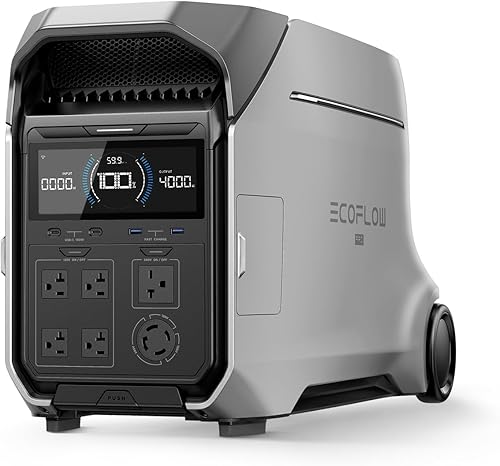
EF ECOFLOW DELTA Pro 3 Portable Power Station, 4096Wh LFP Battery, Expandable to 48kWh, 120/240V 4000W AC Output, Solar Generator for Home Use, Camping Accessories, Emergencies, Power Outages, RVs
- 4096Wh LFP battery, expandable to 12kWh
- 3600W AC output (7200W split-phase)
- Smart Home Panel compatible, app control
How to Turn "My Gear" Into a Wattage
The mistake almost everyone makes is picking a panel by gut feel. The number you need comes from two things: how much energy you use per day, and how many good sun hours you get to make it back.
Step 1 - Add up your daily watt-hours (Wh)
Every device stores energy in watt-hours. A phone battery is roughly 12-19Wh. A 10,000mAh USB power bank is about 37Wh. A headlamp or GPS is a few Wh each. Add a day's worth together. A typical solo kit lands around 40-80Wh per day.
A portable power station is a different animal. A small one is 200-300Wh; a mid unit is 500-1000Wh. Refilling even a partly drained station is where small panels fall flat on their face.
Step 2 - Derate the panel to real-world output
A panel almost never delivers its label number. Sun angle, heat, haze, and cable losses knock it down. Plan on roughly 60-70% of the rated wattage in genuinely good sun. A 30W panel realistically makes about 18-21 usable watts; a 100W panel makes about 60-70.
Step 3 - Multiply by your peak sun hours
"Peak sun hours" is the number of hours per day the sun is strong enough to count at full strength - usually 4-6 hours in summer, fewer in forest or mountains. Usable watts times peak sun hours gives daily watt-hours generated. A 30W panel at 20 real watts over 5 hours is about 100Wh a day. A 100W panel is about 300-350Wh a day. You can read more about how location changes this at Wikipedia's page on insolation.
Step 4 - Match generation to your draw
If your daily draw is 60Wh and a 30W panel makes 100Wh, you have margin for cloudy stretches. If you are trying to put 250Wh back into a power station, a 30W panel physically cannot get there in one day - you need the 100W class.
The Sizing Checklist, In Order
- List every device and its Wh. Gotcha: a phone's mAh is not Wh. Multiply mAh by 3.7 volts, then divide by 1000 (a 4,000mAh phone is about 15Wh).
- Decide if a power station is in the mix. Gotcha: if yes, this single item usually dwarfs everything else and sets your panel size on its own.
- Estimate your peak sun hours for the site. Gotcha: tree canopy and canyon walls can cut this in half - scout your actual campsite, not the regional average.
- Derate the panel by ~35%. Gotcha: buying "exactly enough" on paper leaves nothing for the first cloudy afternoon. Always oversize a little.
- Confirm the output ports match your gear. Gotcha: a phone that wants USB-C PD will trickle slowly off a plain 5V USB-A port. Check the panel's output type against your fastest device.
- Confirm the cable set reaches your power station. Gotcha: many stations need a specific DC barrel or a multi-tip cable, not USB.
- Check the waterproof rating against your conditions. Gotcha: dew and surprise rain are the norm camping, so a stated IP rating matters even on a "dry" trip.
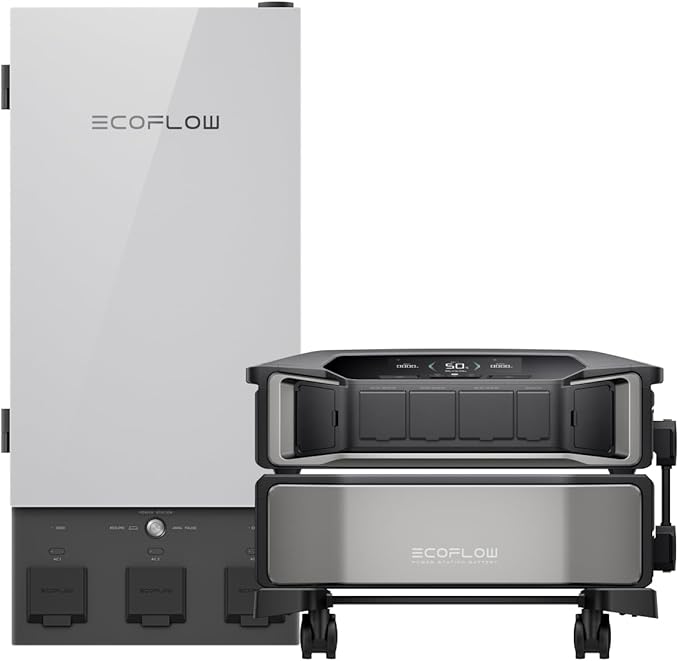
EF ECOFLOW DELTA Pro Ultra and Smart Home Panel, 6000Wh Power Station, Expandable to 90kWh, 7200W AC Output, 2-Hour Full Charge Lifepo4 Home Battery Backup Solar Generator for RV a
- 6kWh capacity, expandable to 90kWh
- 7200W split-phase output
- Whole-home backup with smart panel
What Goes Wrong (and the Fix)
The panel is in partial shade
Symptom: charging crawls or stops even though it looks sunny. Solar cells are wired in series, so shading one corner - a tent guy-line, a branch, dappled leaf shade - can crater the whole panel's output. Fix: place the panel in fully open sun and re-check every hour as the sun moves.
Wrong port or cable for the device
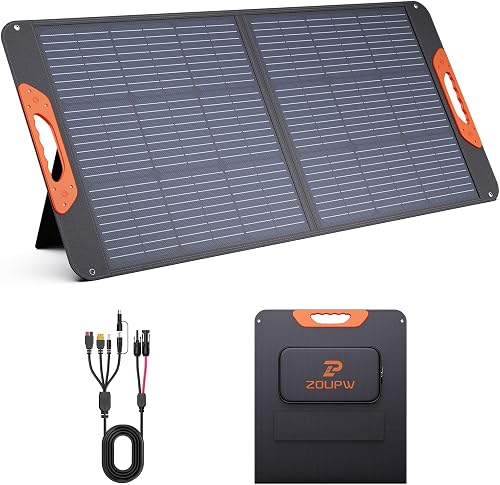
Symptom: phone says "charging" but barely gains, or a power station won't accept input. Fix: use the USB-C output for fast-charge phones and tablets, and use the panel's dedicated station cable (many, like the ZOUPW, ship a multi-tip cable) for a power station rather than a USB port.
Passing clouds keep interrupting the charge
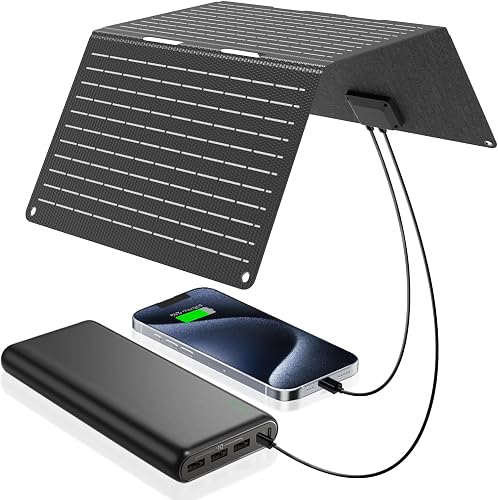
Symptom: your phone stops and won't restart charging when the sun returns. Direct-to-phone charging relies on a stable handshake that intermittent sun breaks. Fix: charge a USB power bank from the panel, then charge your phone from the power bank. The bank absorbs the flicker.
The panel is flat on the ground
Symptom: weak output at midday and almost nothing morning or evening. A flat panel misses most of the sun's angle. Fix: use the built-in kickstands or adjustable stands and aim the face square at the sun.
The panel is simply too small for a power station
Symptom: the station's charge level barely moves, or drops if you use it while charging. A 28-40W panel cannot out-run the draw of a mid-size station. Fix: move up to a 100W-class panel, or run the station charge overnight from a full panel-charged buffer.
Overheating on a hot day
Symptom: output sags in the hottest part of a clear afternoon. Solar cells lose efficiency as they heat up. Fix: keep a small air gap under the panel and avoid laying it flat on hot rock or a car hood.
Specification and Compatibility Table
Built only from each product's listed data. Where a manufacturer did not state a figure, it reads "Not stated" - not a guess.
| Panel | Rated Watts | Price | Outputs | Efficiency | Water Rating |
|---|---|---|---|---|---|
| Renogy 100W N-Type | 100W | $124.99 | USB-A & USB-C | 25% | Not stated |
| ZOUPW 100W Mono | 100W | $88.31 | 5-in-1 cable (power stations) | 23.5% | IP67 |
| VTOMAN 40W | 40W | $109.99 | USB-C & USB-A | Not stated | Waterproof (rating not stated) |
| SOLUPUP 30W | 30W | $45.99 | 5V USB-A & USB-C | Not stated | IPX5 |
| ELECOM NESTOUT 28W | 28W | $99.99 | Dual USB-A | Not stated | Water-resistant (rating not stated) |
| Ecosonique 30W | 30W | $39.99 | USB-C & USB-A | Not stated | IP67 (ETFE) |
Ratings and owner feedback change over time - the Renogy 100W, for example, shows a 4.6-star average across 148 ratings at the time of writing. Go read the current reviews on the product page yourself before you buy, rather than trusting any single snapshot.
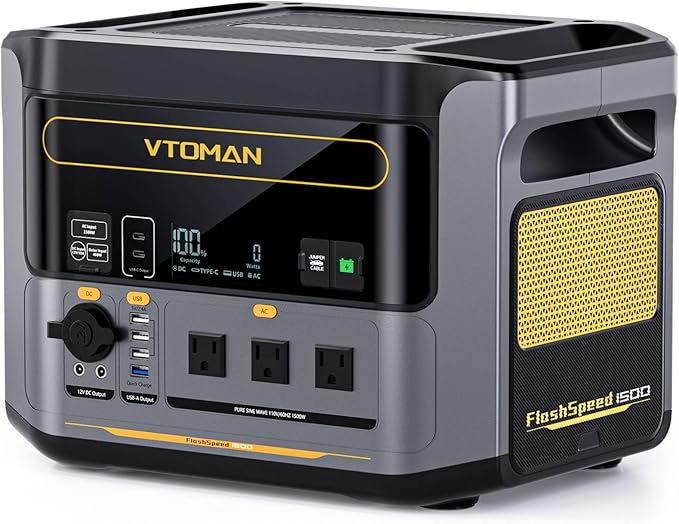
VTOMAN FlashSpeed 1500 Portable Power Station 1548Wh - Recharge 0-100% within 1H, LiFePO4 Battery Powered Solar Generator with 110V/1500W AC Output/Input, 100W USB Port for Camping
- 1548Wh LFP battery
- 1500W AC output (3000W surge)
- Charges 0–80% in under 1 hour via AC
When the Fix Is a New One
Sometimes the panel you own is the wrong tool, not a mis-set one. Replace it when the ports genuinely don't match your gear, when it is too small to ever refill your power station in a day, or when water has gotten inside and output has permanently dropped. Here are panels described by what they change for this specific task - not ranked, just matched to a problem.
If you're refilling a power station and USB output matters
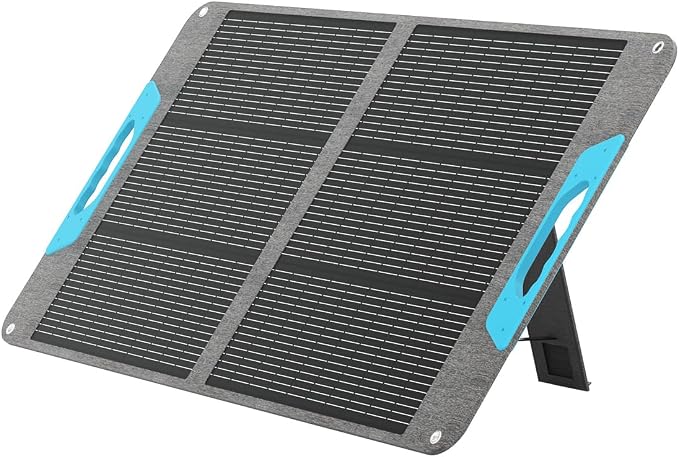
The Renogy 100 Watt N-Type panel moves you into power-station territory with both USB-A and USB-C outputs and built-in kickstands for aiming, at 25% rated efficiency. It changes the job from "trickle a phone" to "put real watt-hours back into a station." Check Price on Amazon
If your problem is the cable never fitting your station
The ZOUPW 100W panel ships a 5-in-1 cable aimed at Jackery, EcoFlow, Anker and Bluetti stations and carries an IP67 rating, so it solves both the too-small and wrong-connector failures at once. Check Price on Amazon
If you only ever charge a phone and a power bank
The Ecosonique 30W panel keeps a solo phone-and-power-bank kit fed with USB-C and USB-A outputs and an ETFE IP67 build, at a light, pack-friendly size. It changes an over-bought heavy 100W setup back into something you'll actually carry. Check Price on Amazon
FAQ
What size solar panel charges just a phone while camping?
A 20-30W folding panel is plenty for one phone plus a small power bank. A phone holds roughly 12-19Wh, and a 30W panel makes about 100Wh of usable energy across a good sunny day - well above one person's phone needs.
Can a 30W panel charge a Jackery or EcoFlow power station?
It will add some charge, but slowly. A 30-40W panel can't out-pace the capacity of most power stations in a single day, especially if you use the station while charging. For station refills, plan on a 100W-class panel like the Renogy or ZOUPW.
How do I convert my power bank's mAh to watt-hours?
Multiply the mAh rating by 3.7 (the cell voltage), then divide by 1000. A 10,000mAh bank is about 37Wh. Use Wh, not mAh, when you compare against a panel's daily output.
Why does my solar panel charge slowly even in full sun?
Usually shading a corner, a flat angle, heat, or a port mismatch. Clear any shade, prop the panel toward the sun with its stand, keep airflow underneath, and use the USB-C output for fast-charge devices.
Do I need a waterproof solar panel for camping?
A stated water rating helps because dew and unexpected rain are normal outdoors. Several panels here list one - the ZOUPW and Ecosonique at IP67, the SOLUPUP at IPX5 - while others only say "water-resistant" without a number. Still, bring the electronics inside during heavy rain.
Is a bigger panel always better for camping?
No. A 100W panel you leave home because it's heavy charges nothing. Match wattage to your real daily draw: small USB gear is happy on 20-30W, and only power stations or group trips justify 100W.
Key Takeaways
- Choosing the right what size solar panel you need to charge your gear while cam means matching the key features to your specific needs and budget
- Read real customer reviews and check the return policy before you commit
- Also covers: solar panel size for camping
- Also covers: how many watts to charge phone camping
- Also covers: solar panel for power station camping
- Compare value across models — the priciest option is not always the best fit