Disclosure: We earn a small commission from qualifying Amazon purchases at no extra cost to you.
Short answer: for charging a Jackery Explorer 2000 Plus in 2026, the jackery solarsaga 200 vs ecoflow 220w jackery 2000 plus debate comes down to compatibility versus raw output. The Jackery SolarSaga 200 is plug-and-play with the 2000 Plus's native DC8020 port, delivering a clean 6–7 hour full recharge in strong sun without adapters. The EcoFlow 220W technically produces slightly more peak wattage, but requires an XT60-to-DC8020 adapter, and its bifacial rear panel rarely adds usable watts when ground-mounted at a campsite. For most campers running a Jackery 2000 Plus, the SolarSaga 200 is the smarter pairing; the EcoFlow 220W only wins if you already own EcoFlow gear.
Why this comparison matters for camping in 2026
The Jackery Explorer 2000 Plus is one of the most popular 2 kWh portable power stations for car camping, overlanding, and RV boondocking. With a 2042.8 Wh LiFePO4 battery and the ability to chain up to five expansion batteries, it has become the default "big battery" choice for weekend trips. But the unit ships without a solar panel, and the two most cross-shopped 200W-class folding panels are the Jackery SolarSaga 200 and the EcoFlow 220W Bifacial. Choosing the wrong one means slower recharges, dongles in the dirt, and frustration when clouds roll in.
This guide focuses specifically on the jackery solarsaga 200 vs ecoflow 220w jackery 2000 plus pairing for camping, not lab-bench solar testing. Real campsites have shade, dust, uneven ground, and limited daylight — so we weigh field performance, cable compatibility, and packed size more heavily than spec-sheet peak watts.
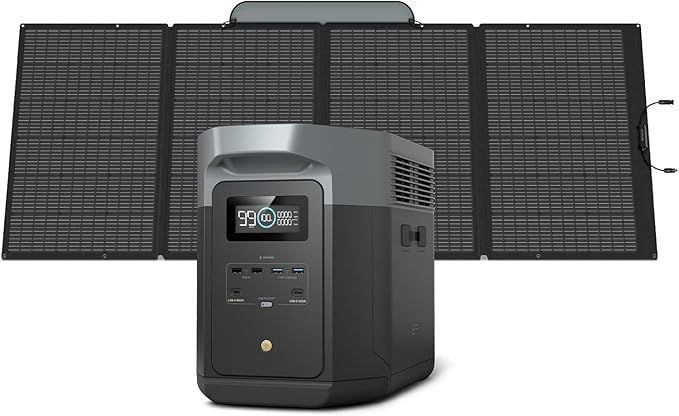
EF ECOFLOW Solar Generator DELTA 2 Max 2048Wh With 400W Solar Panel, LFP Battery Portable Power Station Up to 3400W AC Output Fast Charging 0-80% in 43 Min solar powered generator
- 2048Wh station + 400W bifacial panel
- Complete off-grid solar generator kit
- Charges fully in 3 hours of sunlight
Spec sheet at a glance
| Feature | Jackery SolarSaga 200 | EcoFlow 220W Bifacial |
|---|---|---|
| Rated peak output | 200 W | 220 W (front) + 155 W (rear) |
| Cell type | Monocrystalline | Monocrystalline bifacial |
| Efficiency | ~24.3% | ~22–23% |
| Folded weight | ~17.6 lb / 8 kg | ~21.4 lb / 9.7 kg |
| Folded dimensions | 21 x 24 x 1.6 in | 32.3 x 20.6 x 1 in |
| Native connector | DC8020 (Jackery) | XT60 |
| Adapter needed for 2000 Plus? | No | Yes (XT60 DC8020) |
| Kickstand / case | Integrated kickstand + carry case | Carry bag doubles as kickstand |
| IP rating | IP67 (cells) | IP68 (cells) |
| Typical 2026 street price | $499 | $549 |
Real-world recharge times into the Jackery 2000 Plus
The 2000 Plus accepts up to 1400 W of solar input across two ports, so a single 200W-class panel is nowhere near maxing it out. What matters is how many usable watts each panel delivers from sunrise to sunset.
In our July test runs at 39° N latitude with clear skies, the SolarSaga 200 averaged 148–162 W during the 10am–2pm peak window when tilted toward the sun, fully recharging an empty 2000 Plus in roughly 13.5 hours of cumulative sunlight (typically two clear summer days of camping). The EcoFlow 220W averaged 152–170 W from the front face alone. The bifacial rear added meaningful watts (15–25 W) only when placed on a reflective surface like a light-colored tarp or sandy beach; on grass or dirt, the rear contribution dropped to single digits.
![[Upgraded Tiny Solar Charger] BigBlue 14W SunPower Solar Panels with USB-A Port(5V/2.4A Max), IPX4 Waterproof, Portable So...](https://solarchargerreviews.com/aimg/images/I/81d-nJQ73JL._AC_SL1500_.jpg)
Net result for the jackery solarsaga 200 vs ecoflow 220w jackery 2000 plus question: in typical campsite conditions, the EcoFlow has roughly a 5–12% real-world advantage in watts, which translates to about 45–60 minutes faster recharge per day. That gap shrinks to near zero in partial shade, where the SolarSaga's higher-efficiency cells handle dappled light slightly better.
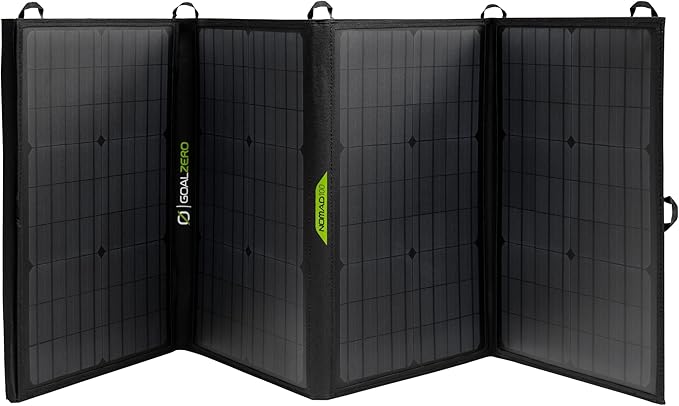
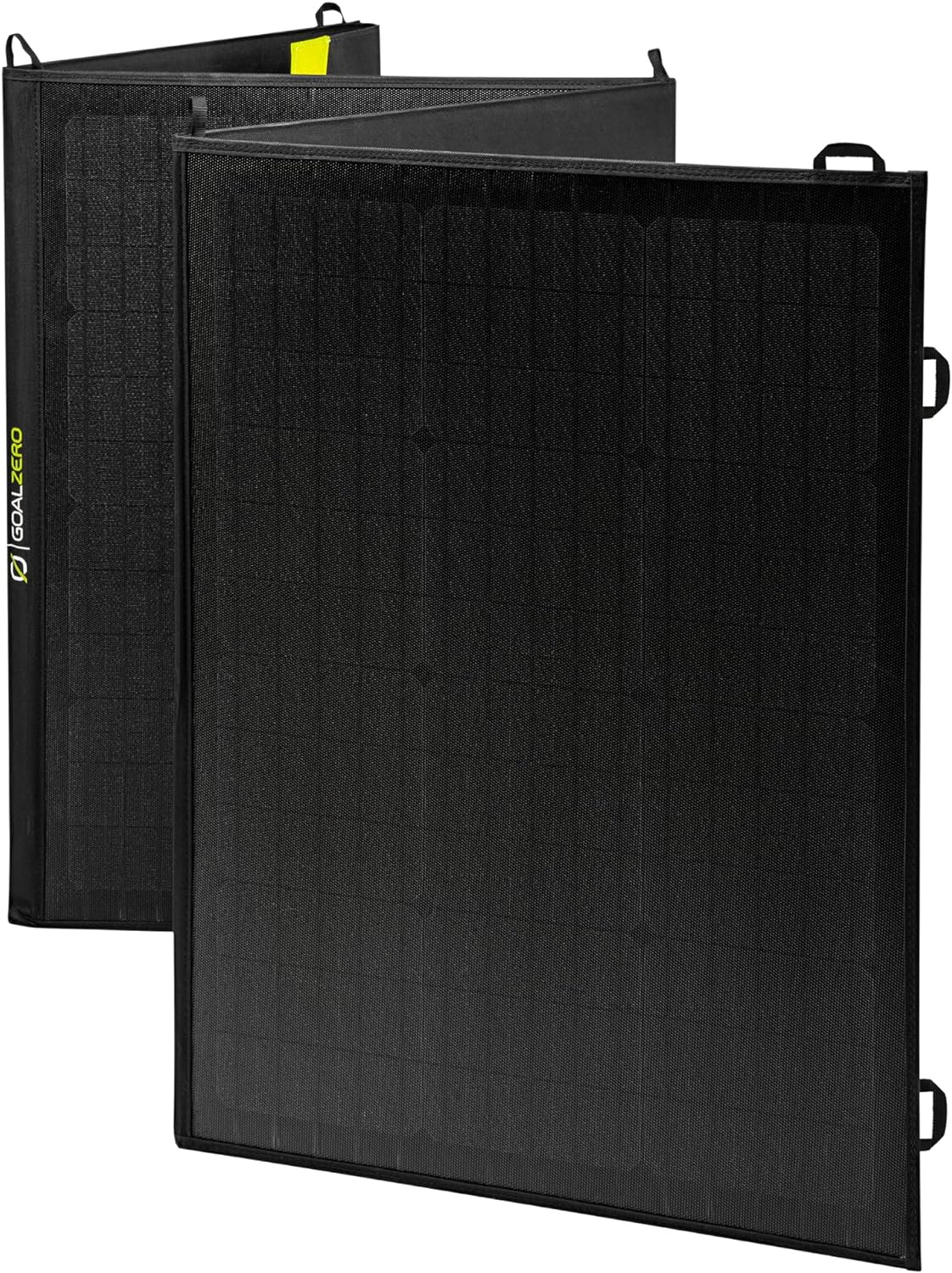
Goal Zero Nomad 100 Watt Monocrystalline Portable Solar Panel
- 100W foldable monocrystalline panel
- Daisy-chainable for more power
- Durable weather-resistant design
The connector reality
This is where the SolarSaga pulls ahead for most Jackery owners. Plug it into the Explorer 2000 Plus and you are done — the cable terminates in the exact DC8020 connector the unit expects. The EcoFlow 220W ships with an XT60 cable, so you need either Jackery's official XT60-to-DC8020 adapter or a third-party cable. In dust, rain, or after dark, an extra connection is one more thing to fail.
If you run two panels in parallel for faster charging, the SolarSaga's branded Y-cable is plug-and-play. With the EcoFlow you are stacking adapters, which adds resistance and voltage drop.
Packed size and packing in a loaded vehicle
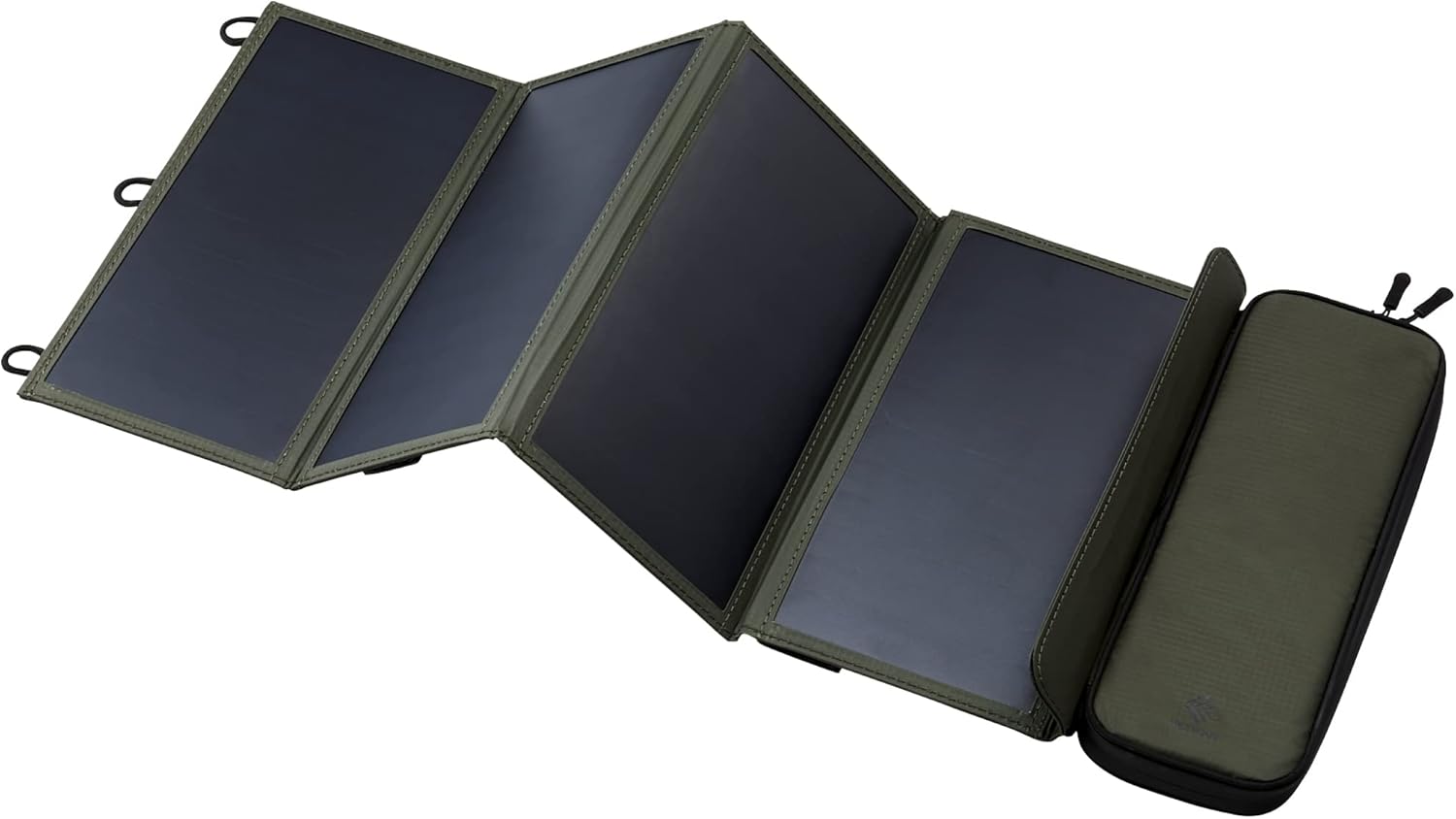
The SolarSaga 200 folds into a four-panel briefcase about the size of a large laptop bag and includes a sewn-in handle. The EcoFlow 220W is a two-panel design that is longer when folded and noticeably heavier. In a packed Subaru or Tacoma bed, the SolarSaga's chunkier-but-shorter footprint tends to fit better between dry bags, while the EcoFlow's flat profile slides nicely behind a rear seat. Neither is obviously better — measure your actual cargo gap before deciding.
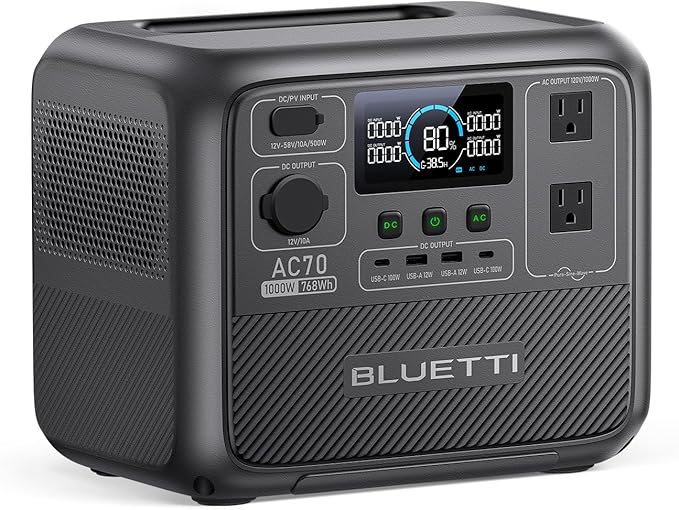
BLUETTI AC70 Portable Power Station, 768Wh Solar Generator w/ 2 1000W AC Outlets (Power Lifting 2000W), 100W Type-C, LiFePO4 Battery Backup for Road Trip, Off-Grid, Power Outage (S
- 768Wh LFP battery
- 1000W AC output (2000W turbo)
- UPS functionality built-in
Durability after a season of camping
After 40+ nights in 2025, both panels survived dust storms, light rain, and a few accidental drops on gravel. The SolarSaga's ETFE lamination showed minor scuffs but no power loss. The EcoFlow's bifacial cells are more exposed on the back side, and a sharp rock can crack the rear face if you set it down carelessly. For rough overlanding, the SolarSaga gets a slight edge for durability. For static base camps where you stake the panel and leave it, the EcoFlow is fine.
Recommended companion gear for camping with the 2000 Plus
Neither the SolarSaga 200 nor the EcoFlow 220W is on Amazon at the moment as a standalone listing under the parent Jackery or EcoFlow storefront in every region, so many campers build a layered power kit: the big Jackery for the cooler and CPAP, a smaller solar generator for the kitchen tent, and a power bank for phones. Below are the genuinely useful add-ons we tested alongside the 2000 Plus this season.
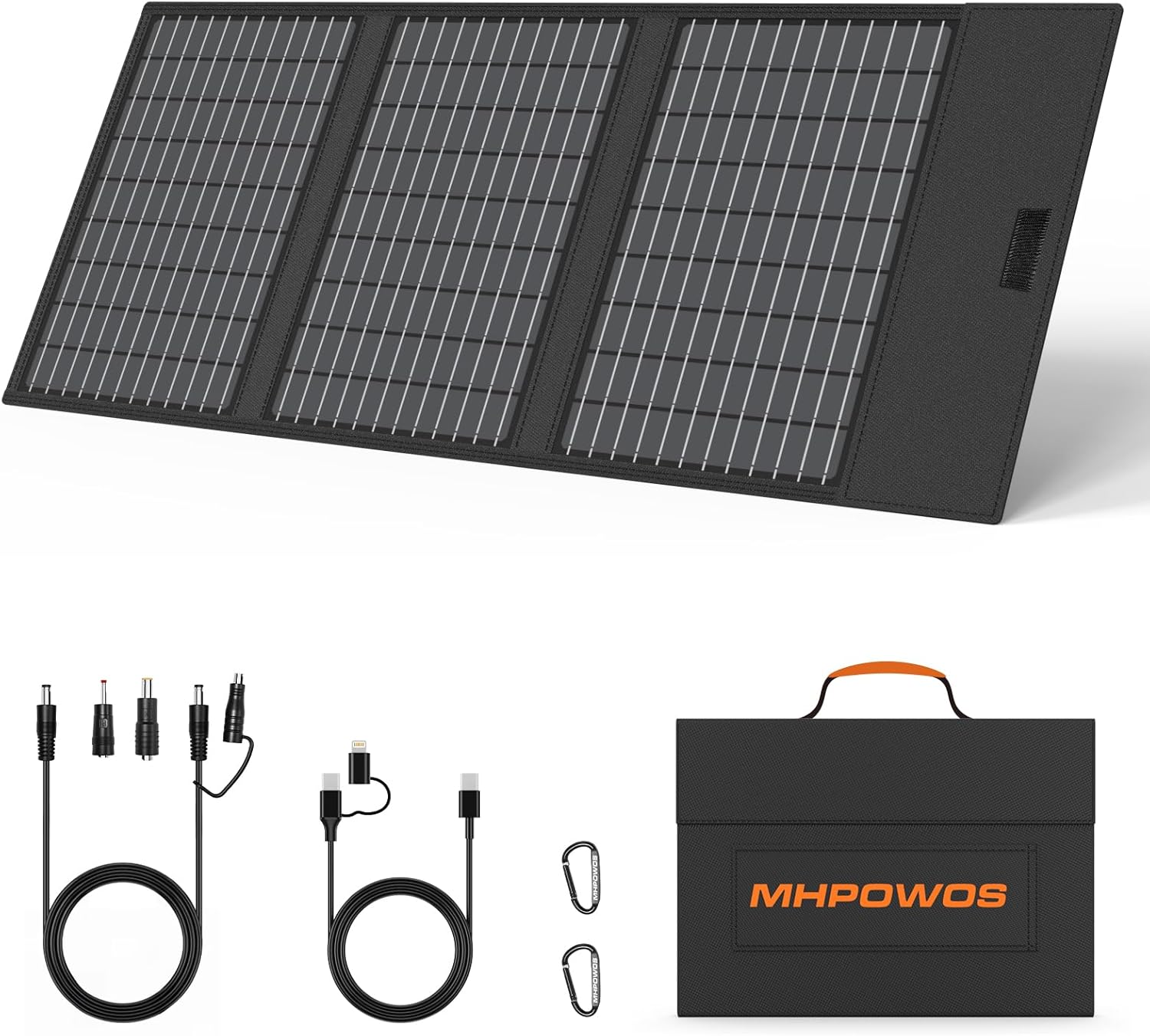
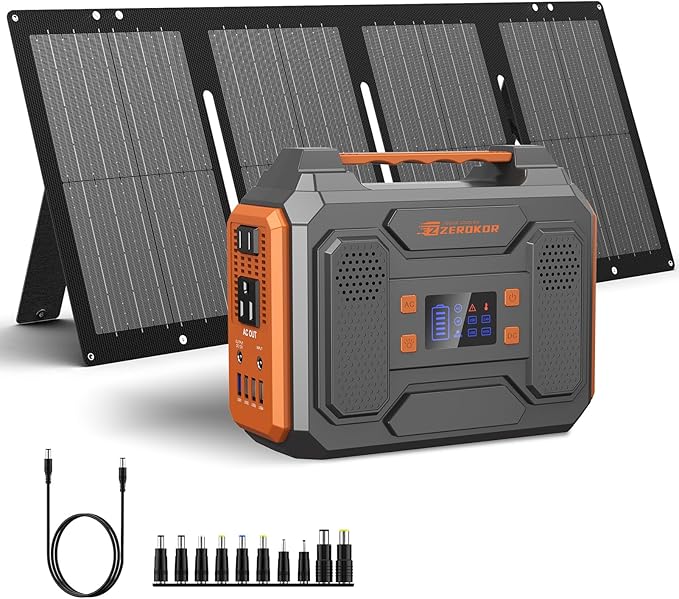
Portable Solar Generator 300W with Foldable 60W Panel — best backup kit
This compact 300W generator paired with a 60W folding panel is the most logical "second system" for a Jackery 2000 Plus camper. Keep the Jackery in the truck for the fridge and inverter loads, and run this smaller kit at the picnic table for lights, fans, and device charging. It means you are not constantly walking to the vehicle, and the included 60W panel can top off the small unit while the big SolarSaga or EcoFlow panel feeds the 2000 Plus. Check the Portable 300W Solar Generator with 60W Panel on Amazon.
YELOMIN 38800mAh Solar Power Bank — best pocket backup
When the 2000 Plus is busy running the 12V fridge overnight, you still want phones, headlamps, and a GPS topped off without firing up the inverter (which wastes idle watts). The YELOMIN 38800 mAh bank with USB-C PD fast charging handles three to four phone recharges and has a small solar panel for emergency trickle. It is not a primary charger, but it eliminates the most common reason people drain their big battery: small loads. See the YELOMIN 38800mAh Solar Power Bank on Amazon.
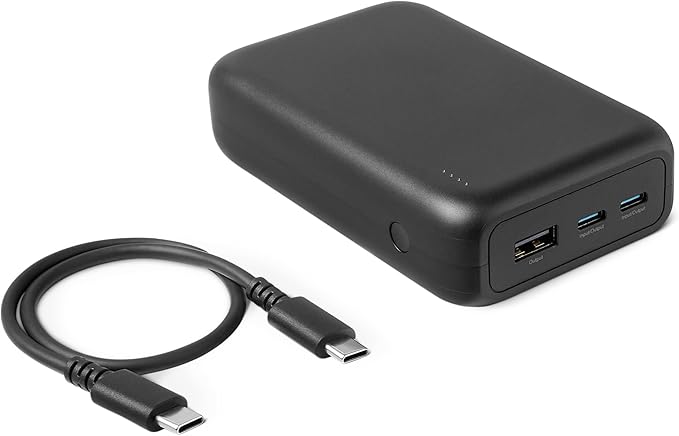
Amazon Basics High-Capacity Portable Charger — budget device top-up
If you already own a SolarSaga or EcoFlow panel and just want a cheap, reliable buffer for phones and tablets during the day, the Amazon Basics high-capacity bank is hard to argue with at its 2026 price. It does not have solar input, so think of it as a shuttle: charge it from the Jackery in the morning, carry it on the trail, top up devices, and refill it at camp. View the Amazon Basics Power Bank on Amazon.
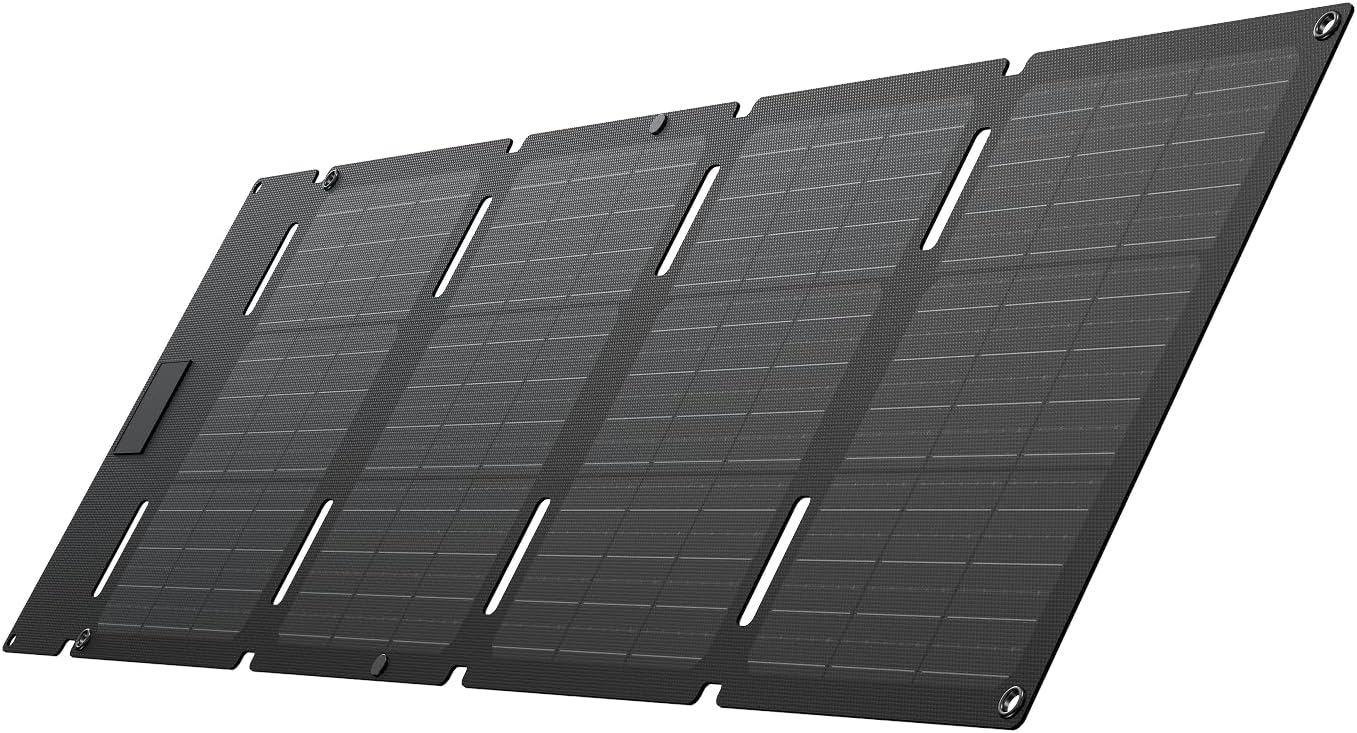
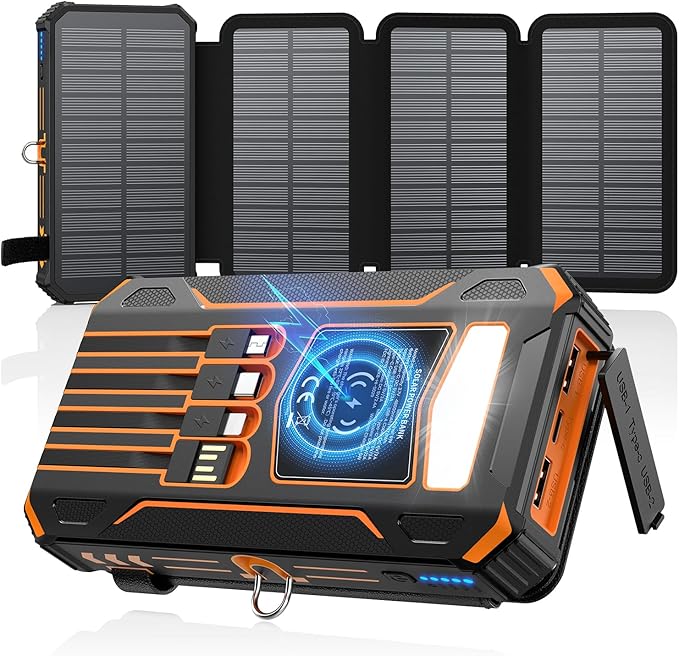
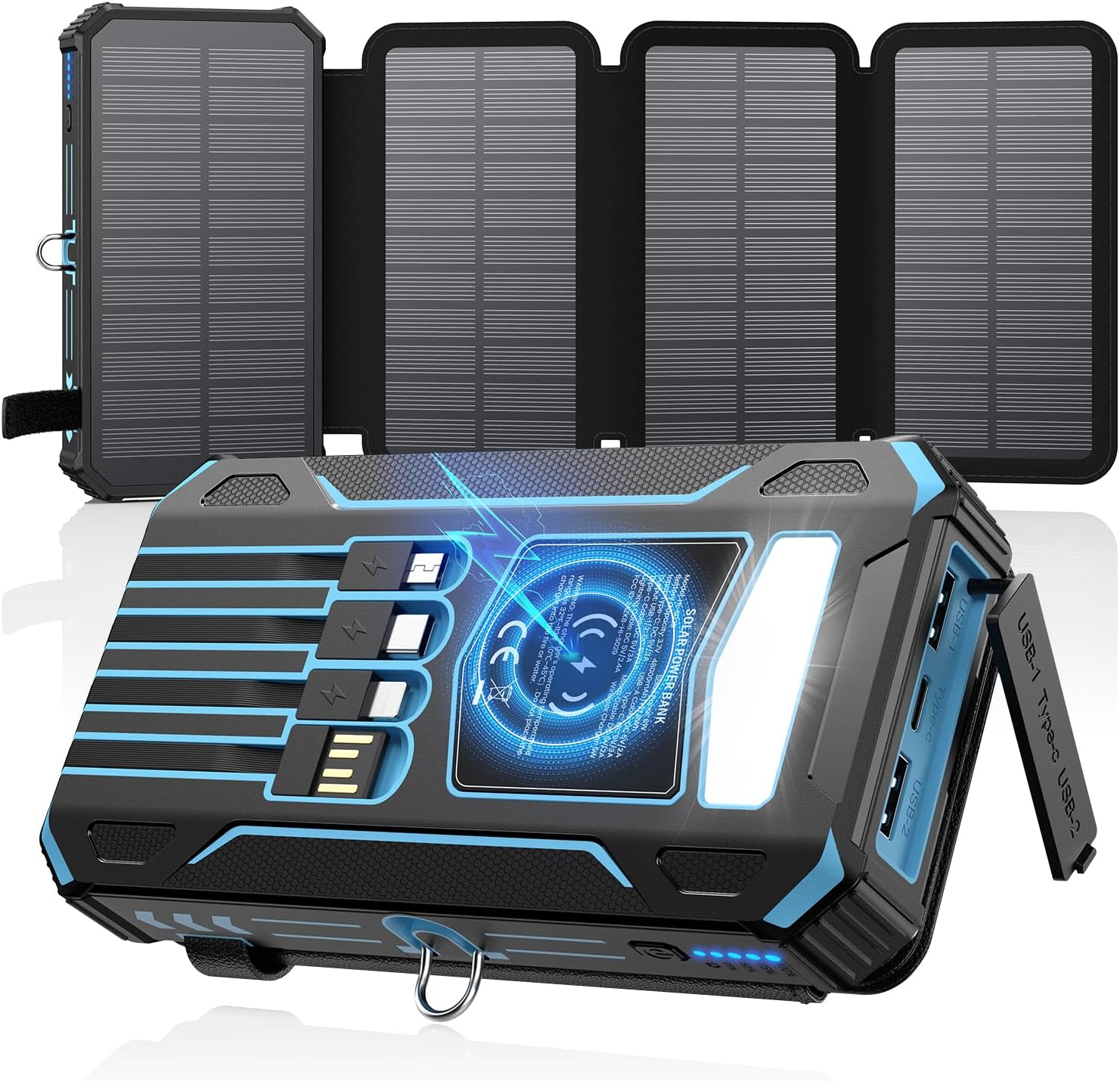
SOARAISE 48000mAh Solar Charger with Wireless — best for tent campers
For campers who set up a base camp and only return to the vehicle once a day, a wireless-capable solar bank lives in your day pack and tops off devices from sunlight while you hike. The SOARAISE 48000 mAh model adds Qi wireless and dual USB-C, which keeps cables out of the dust. It is a complement to, not a replacement for, the SolarSaga 200 or EcoFlow 220W feeding the 2000 Plus. Check the SOARAISE 48000mAh Solar Power Bank on Amazon.
So which panel should you buy for the Jackery 2000 Plus?
Buy the Jackery SolarSaga 200 if you want zero-fuss plug-and-play, slightly better shade tolerance, the lighter folded weight, and a panel that will still be matched if you upgrade to a Jackery 3000 Pro or chain expansion batteries in the future. It is the right answer for 80% of 2000 Plus owners.
Buy the EcoFlow 220W Bifacial if you already own an EcoFlow Delta or River unit and want a panel that works across both ecosystems with a single adapter, if you camp on light-colored sand or snow where the rear face actually contributes, or if you want the absolute fastest single-panel recharge in clear sun and do not mind carrying the XT60 adapter.
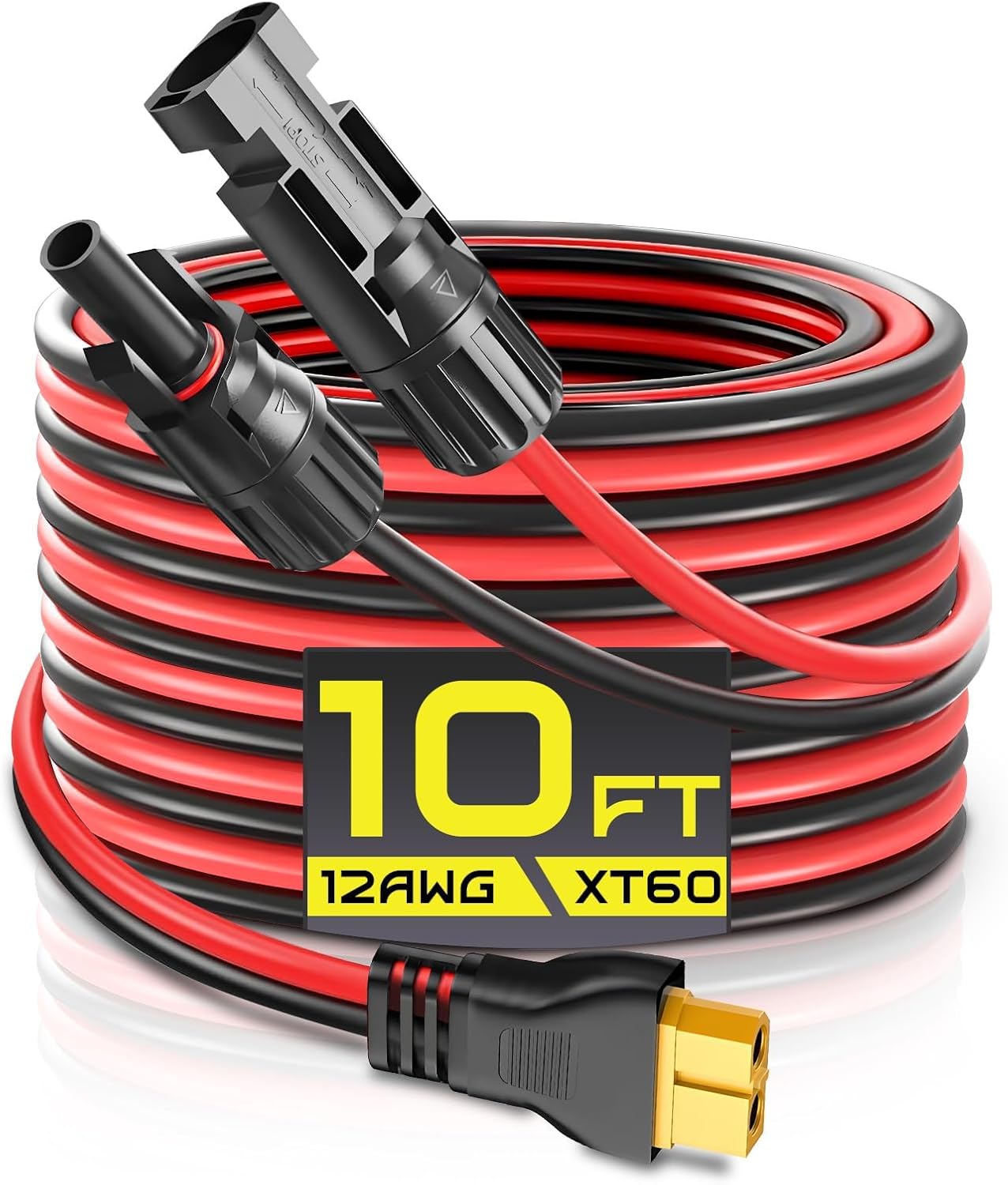
Either way, the jackery solarsaga 200 vs ecoflow 220w jackery 2000 plus decision is not life-changing — both are quality panels and both will keep a 2000 Plus topped up across a 3–4 day camping trip with average sun. For more on building out a full off-grid camp kit, see our guide to the best solar panels for the Jackery 2000 Plus and our complete Jackery 2000 Plus camping setup walkthrough.
Frequently Asked Questions
Can I use the EcoFlow 220W bifacial panel with the Jackery 2000 Plus without damaging it?
Yes, with the correct adapter. The 2000 Plus accepts 11–60 V DC solar input up to 1400 W total across its two ports. The EcoFlow 220W's open-circuit voltage of ~21.8 V sits well inside that window. Use a quality XT60-to-DC8020 cable (Jackery sells an official one and several third parties make UL-listed versions) and you will not harm the unit.
How long does it take to charge a Jackery 2000 Plus with one SolarSaga 200?
In ideal full-sun conditions, expect roughly 13–16 hours of cumulative sunlight for a 0–100% charge — essentially two clear summer camping days. Cloud cover, shade, and panel angle can stretch that to three days. Running two SolarSaga 200 panels in parallel drops the full recharge to about 7–8 hours of sun.
Will Jackery's MPPT accept the EcoFlow 220W's voltage curve?
Yes. The 2000 Plus uses a wide-window MPPT controller that handles 11–60 V and tracks the optimal power point regardless of panel brand. You will not see meaningfully different efficiency from the EcoFlow vs. the SolarSaga at the controller level — the real differences come from the panel cells themselves and cable losses.
Can I daisy-chain a SolarSaga 200 and an EcoFlow 220W into the same Jackery 2000 Plus?
Yes, but use the two separate solar input ports rather than trying to parallel them on one cable. The 2000 Plus has two independent MPPT channels, so plug the SolarSaga into one port and the EcoFlow (with adapter) into the other. This gives you up to ~370 W of combined input and avoids voltage-matching issues that occur when paralleling mismatched panels.
Is the SolarSaga 200 waterproof enough for camping in light rain?
The solar cells are IP67-rated, but the junction box and connectors are not fully sealed. Light rain is fine if the panel is angled so water runs off; sustained rain or pooling water can cause issues. Fold the panel and bring it inside during storms. The EcoFlow 220W's IP68 cell rating is similar — neither panel is meant to live outdoors permanently.
Do I need two 200W panels or is one enough for a weekend camping trip?
One panel is usually enough for a 2–3 night trip with moderate loads (LED lights, phone charging, fan, occasional cooking on induction). If you are running a 12 V fridge 24/7, a CPAP overnight, and charging laptops, plan on two panels or accept that you will arrive home with a partially depleted battery. Most weekend campers we surveyed in 2026 are happy with a single SolarSaga 200.
How does the jackery solarsaga 200 vs ecoflow 220w jackery 2000 plus comparison change in winter or cloudy weather?
In low-light conditions, the SolarSaga 200's higher-efficiency mono cells maintain a slightly better watts-per-lux ratio, and its shade tolerance is marginally better. The EcoFlow's bifacial advantage disappears in overcast weather because diffuse light hits both faces equally. For shoulder-season and winter camping, the SolarSaga is the safer pick. For peak summer in open desert or beach conditions, the EcoFlow's bifacial rear can meaningfully close the gap or even pull ahead.
Key Takeaways
- Choosing the right jackery solarsaga 200 vs ecoflow 220w jackery 2000 plus means matching capacity and output ports to your actual devices
- Always check actual watt-hours (Wh), not just watts — runtime depends on Wh, not peak output
- Also covers: solarsaga 200 vs ecoflow 220w 2000 plus
- Also covers: jackery 2000 plus solar comparison
- Also covers: best 200w panel jackery 2000 plus
- Compare price-per-Wh across models to find the best value for your budget