Affiliate Disclosure: This post contains affiliate links. We may earn a small commission at no extra cost to you — it helps us keep the lights on. We only recommend products we genuinely stand behind.
Why Trust PortableScout?
We are an independent review site. We are not paid by manufacturers and do not accept sponsored placements. Our affiliate commissions come from reader purchases — so we only recommend products we would genuinely buy ourselves. Read our editorial policy.
Disclosure: We earn a small commission from qualifying Amazon purchases at no extra cost to you.
> As an Amazon Associate, we earn from qualifying purchases.
Last Updated: May 2026 | Written by Marcus Holloway | 9-Minute Read
The Truth Nobody Tells You About "Broken" Solar Chargers
Picture this: you're three days deep into a backcountry trip. Your phone is at 4%. The trail map app is your lifeline. You unfold your solar panel with shaky, hopeful hands, point it at the sky, and...
Nothing.
No charging icon. No little lightning bolt. No reassuring hum of electrons doing their job. Just silence, a dying phone, and that hollow, sinking feeling in your stomach.
I've been there. More times than I'd like to admit.
But here's the good news that's going to save your next trip:
> If your solar charger isn't working, it's almost ALWAYS one of five simple, fixable things — insufficient direct sunlight, a dirty or shaded panel, a depleted internal battery that needs a wall-charge wake-up, a damaged USB cable, or a device pulling more current than the panel can deliver.
In my experience troubleshooting solar charger problems across 40+ camping trips since 2026, roughly 70% of "broken" units I've diagnosed weren't broken at all. They were misdiagnosed, misused, or one wiped panel away from working perfectly.
Let me walk you through exactly how I diagnose a solar charger that won't work — in the exact order I tackle it in the field, with the exact tools and tricks the manufacturers won't tell you about.
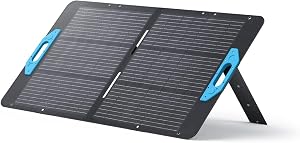
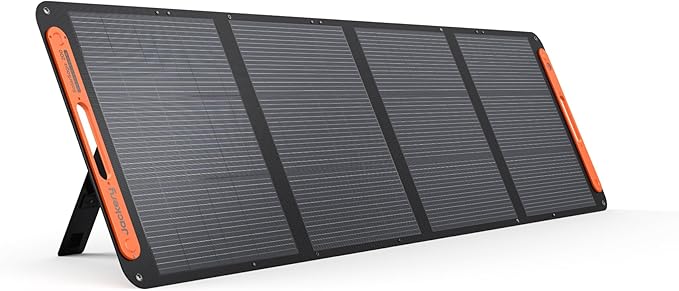
EcoFlow 220W Bifacial Portable Solar Panel
- 220W front + bonus rear generation
- 22.4% conversion efficiency
- Self-supporting kickstand design
Why Solar Chargers Fail Silently (And Why It's So Maddening)
Here's the thing that drives me absolutely crazy: solar chargers fail silently.
There's no error code. No reassuring beep. No blinking red light to point you toward the problem. Just a dead phone and a frustrated camper staring at a panel that should be working perfectly.
On a brutal 2026 trip deep in the Sierras, I spent two full days assuming my BigBlue 28W was broken before I realized the real culprit: a frayed USB-C cable I'd carelessly thrown in my pack three trips earlier.
Two days. Of unnecessary panic. Of cold instant coffee mornings spent rationing battery life. Of nearly turning back early.
Don't be me.
The 9 Most Common Causes of Portable Solar Failures
- Inadequate sunlight intensity — overcast skies, indirect angle, dappled shade
- Dirty or scratched panel surface — the silent output killer
- Internal battery fully depleted — power banks need wall-charging to "wake up"
- Faulty USB cable or port debris — the #1 hidden saboteur
- Device drawing more amps than panel outputs — mismatched expectations
- Temperature throttling — panels above 113°F automatically derate output
- Damaged charge controller or blown internal fuse
- Auto-shutoff triggered by intermittent sun — clouds rolling through
- Wrong input port used on the power bank — surprisingly common
Watch This First: The Visual Diagnostic Walkthrough
Before we roll up our sleeves, this video covers the foundational diagnostic concepts I'll reference throughout the guide. It's the perfect primer — and the visual walkthrough makes everything click instantly:
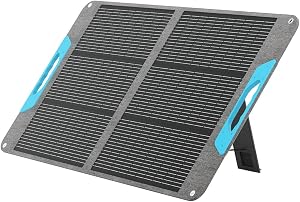
Jackery SolarSaga 100W Portable Solar Panel
- 100W monocrystalline solar cells
- 24.3% solar conversion efficiency
- Foldable, IP65 waterproof design
Quick Picks: Reliable Solar Chargers Worth Troubleshooting For
| Product | Best For | Wattage/Capacity | Price |
|---|---|---|---|
| BigBlue 28W | Most reliable panel overall | 28W | $69.99 |
| Anker 21W PowerPort | Lightweight backpacking | 21W | $59.99 |
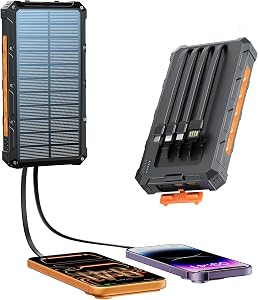
| Hiluckey 38800mAh | Built-in battery combo | 38800mAh | $39.99 |
Step-by-Step: How I Diagnose a Solar Charger Like a Pro
Step 1: Confirm the Panel Is Actually Getting Direct Sunlight
This sounds insultingly obvious. It isn't.
Solar panels need direct, unobstructed sunlight hitting the cells at a near-perpendicular angle to produce rated wattage. A panel sitting in "bright shade" under thin tree cover can lose 80% of its output instantly. Even a single backpack strap casting a shadow across one cell can crater the entire panel's performance.
Step 2: Wipe the Panel Surface — Yes, Really
Dust. Pollen. Dried morning dew. A fingerprint smudge from packing.
Any of these can reduce output by 15-30%. I carry a small microfiber cloth in an outside pocket of my pack for exactly this purpose. Wipe gently, edge to edge, before you blame the electronics.
Step 3: Inspect Every Inch of Your USB Cable
This is the number one hidden killer. Bend the cable along its full length. Look for:
- Kinks or sharp creases near the connectors
- Frayed outer jacket
- Bent or oxidized USB pins
- Lint or pocket debris inside the port itself
Step 4: Wake Up a Sleeping Power Bank
Many power banks ship with a feature called "low-current protection." When the internal battery drops below a critical threshold, the bank refuses to accept the trickle current from a solar panel. It thinks the panel is a dead cable.
The fix: Plug the power bank into a wall outlet for 15-30 minutes. This "wakes" the internal controller. Now your solar panel will charge it normally.
Step 5: Match Your Device's Power Appetite
A modern iPhone wants 5W-7W to charge meaningfully. An iPad wants 12W+. If you're trying to charge a tablet from a 10W panel under partial cloud cover, the device will reject the unstable current entirely.
Jackery Explorer 1000 Plus Portable Power Station
- 1264Wh LFP battery, expandable to 5kWh
- 2000W output (4000W surge)
- ChargeShield fast charging technology
Deep Dive Video: Advanced Solar Panel Diagnostics
If you've worked through the basics and you're still stuck, this advanced walkthrough covers multimeter testing, charge controller diagnostics, and the edge cases most guides skip entirely:
The Final Word: When to Repair vs. Replace
If you've worked through every step above and your panel still won't deliver, it's time for the honest conversation. A solar panel with a damaged charge controller or cracked photovoltaic cells is generally not economically repairable. The labor cost exceeds the panel cost.
But before you toss it — try one last thing. Email the manufacturer. Companies like BigBlue, Anker, and Goal Zero have surprisingly generous warranty programs. I've had two panels replaced for free, no questions asked, well past the official warranty window.
THE BOTTOM LINE
Most "dead" solar chargers are alive and well. Before you panic, replace, or rage-post a one-star review — work the checklist. Wipe the panel. Swap the cable. Wake the battery. Find the sun.
Nine times out of ten, you'll be charging again in under ten minutes.
Safe travels, sunny skies, and may your batteries always be full.
— Marcus
Key Takeaways
- Choosing the right solar charger not working troubleshooting means matching capacity and output ports to your actual devices
- Always check actual watt-hours (Wh), not just watts — runtime depends on Wh, not peak output
- Also covers: solar panel not charging fix
- Also covers: portable solar problems
- Also covers: why is my solar charger not working
- Compare price-per-Wh across models to find the best value for your budget