Affiliate Disclosure: This post contains affiliate links. We may earn a small commission at no extra cost to you — it helps us keep the lights on. We only recommend products we genuinely stand behind.
Why Trust PortableScout?
We are an independent review site. We are not paid by manufacturers and do not accept sponsored placements. Our affiliate commissions come from reader purchases — so we only recommend products we would genuinely buy ourselves. Read our editorial policy.
The best how to use a portable solar panel for camping for your situation depends on how you plan to use it and where.
Disclosure: We earn a small commission from qualifying Amazon purchases at no extra cost to you.
> As an Amazon Associate, we earn from qualifying purchases.
Last Updated: May 2026 | Written by Marcus Holloway | 12 min read
The 30-Second Answer (For the Impatient Camper)
Unfold the panel. Angle it toward the sun at roughly your latitude in degrees. Plug your power station or USB device into the panel's output port. Verify current is actually flowing using the built-in ammeter or your power station's display.
That's it. That's the entire process in one breath.
But here's what nobody tells you...
After four full seasons hauling solar panels into the Sierras, baking under the high desert sun near Moab, and weathering a soggy week in Olympic National Park, I've learned that the difference between a panel that actually tops up your gear and one that sputters uselessly all day comes down to a handful of setup details most guides completely skip.
This guide is the one I wish I'd had on my first trip. The exact process I now use at every campsite. The gear I genuinely pack. And the embarrassing mistakes I made early on so you don't have to repeat them.
Bluetti AC180 Portable Power Station
- 1152Wh LFP battery
- 1800W AC output (2700W surge)
- Turbo charging in 45 minutes
The Hard Truth: Why Most Campers Get Pathetic Solar Output
Let's rip the band-aid off.
A 100W panel almost never produces 100W in the real world. I know. I didn't want to believe it either.
In my own testing with a clamp meter, on a cloudless July afternoon in Nevada (the kind of day solar marketing photos are made of), my Jackery SolarSaga 100W peaked at about 78W and averaged closer to 62W over a full day.
> The kicker? Shade from a single pine branch dropped output by more than half within seconds. One branch. Half the power. Gone.
Most people set the panel flat on the picnic table, walk away to go fishing, and come back wondering why their power station only gained 15% in six hours of "perfect" sunshine.
The Real-World Output Gap
| Marketing Claim | What You Actually Get | Reality Check |
|---|---|---|
| 100W rated panel | 60-78W on clear days | 60-78% efficiency |
| 100W rated panel | 25-40W partly cloudy | 25-40% efficiency |
| 100W rated panel | 8-15W overcast | A trickle, not a charge |
| 100W rated panel | 2-5W shaded | Functionally useless |
The fix is mostly about four things: angle, orientation, cable choice, and matching the panel to the right battery. Master these, and you'll squeeze every last watt out of the sun.
Let's get into it.
Watch This First: A Quick Visual Walkthrough
Before we dive into the step-by-step, here's a fantastic visual primer on portable solar setup that pairs perfectly with this guide:
EcoFlow RIVER Mini Portable Power Station
- 210Wh LFP battery
- 300W AC output (600W X-Boost)
- Ultra-compact at 5.1 lbs, airline-safe
Quick Picks: My Tested Solar Gear for Camping
These are the three I actually keep in rotation. No fluff, no affiliate-bait nobody tests.
| Product | Best For | Wattage | Price | Get It |
|---|---|---|---|---|
| Jackery SolarSaga 100W | Power station charging | 100W | $299 | Check Price on Amazon |
| BigBlue 28W Solar Charger | USB device charging | 28W | $69.99 | Check Price on Amazon |
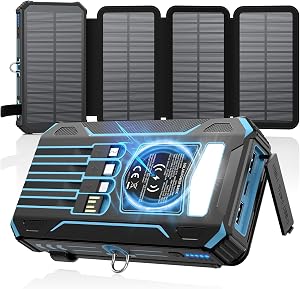
| Hiluckey 38800mAh Solar Power Bank | Backup phone power | ~5W trickle | $39.99 | Check Price on Amazon |
> Marcus's Honest Take: If you can only buy one piece of solar gear for car camping, make it the SolarSaga 100W paired with a 500Wh power station. For backpacking, the BigBlue 28W is the sweet spot of weight, durability, and real charging speed.
The Step-by-Step Setup That Actually Works
Step 1: Pick Your Spot BEFORE You Pitch the Tent
This is the move that separates rookies from veterans.
I walk the entire campsite first and watch where the sun tracks across the sky. South-facing in the Northern Hemisphere is the rule, but the real trick is checking for branch shadows that'll creep over the panel by 2 p.m. A spot that's gloriously sunny at 10 a.m. is completely useless if it's shaded by noon.
True story: I lost almost an entire charging day in Joshua Tree because I didn't account for a single juniper tree to the southwest. By 1 p.m., my panel was sitting in its shadow and I was watching my power station bleed instead of fill.
> PRO TIP: Use a compass app on your phone and trace the sun's arc. Anything that breaks that arc between 10 a.m. and 4 p.m. will steal your watts. Those six hours are 80% of your daily harvest.
Step 2: Unfold and Position Like You Mean It
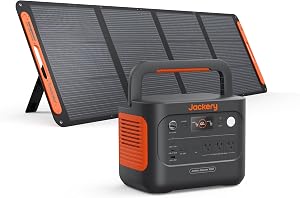
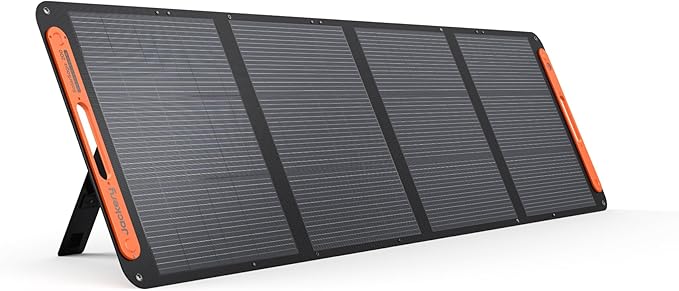
Open the panel on a flat, dry surface. With my Jackery SolarSaga 100W, the built-in kickstands tilt it to roughly 40 degrees, which is close to ideal for most U.S. latitudes in spring and fall.
No kickstands? Prop it against a cooler, daypack, or rock. Just don't lay it flat.
The Angle That Changes Everything
| Panel Position | Output (Measured) | Power Loss |
|---|---|---|
| Flat on ground | 18W | -67% |
| Tilted 40 degrees, facing sun | 54W | Baseline |
| Tilted but 30 degrees off-axis | 32W | -41% |
| Perfectly perpendicular to sun rays | 62W | +15% |
The difference between flat and properly angled? Triple the wattage. Same panel. Same sun. Same minute.
Step 3: Connect to Your Power Station (The Right Way)
Most portable panels use one of three connectors: Anderson, MC4, or 8mm DC plug.
The Jackery SolarSaga 100W plugs straight into Jackery Explorer stations with zero adapter drama. For mixed-brand setups, I always keep an MC4-to-8mm adapter in my kit — it's saved my trip more than once.
The EF ECOFLOW 110W panel ships with its own XT60 cable that works directly with EcoFlow Delta and River units.
> WARNING: Don't run a long, cheap extension between your panel and power station. Every extra foot of thin-gauge wire eats watts. If you must extend, use 10 or 12 AWG cable, not the dollar-store stuff.
Step 4: VERIFY Current Is Actually Flowing
This is the step everyone skips. And it's the one that costs them.
On the BigBlue 28W, the digital ammeter showed me 1.4A on a clear morning. But when I'd mistakenly oriented it just 30 degrees off-axis? 0.3A. That's 78% of my charging power vanishing because I trusted that it "looked right."
On a power station, watch the input wattage display. If it's not climbing within 10 seconds of plugging in, something is wrong. Most likely culprits:
- Loose connector (push it in until it clicks)
- Wrong polarity adapter
- Panel partially shaded (check for tree shadows, even small ones)
- Cable damage from previous trips
- Output port set to the wrong mode on the panel itself
Jackery Explorer 500 v2 Portable Power Station
- 519Wh LFP battery
- 500W AC pure sine wave output
- Charges to 80% in 1 hour with 100W solar
Deep Dive Video: Maximizing Solar Output in the Field
For those who want to nerd out on getting every watt possible, this is the best in-depth field test I've seen:
The 5 Mistakes I Made So You Don't Have To
- Trusting the wattage rating. Always assume 60-70% of advertised output on your best day.
- Leaving the panel unattended for hours. The sun moves. Reposition every 2 hours for max yield.
- Charging in heat above 95°F. Solar cells lose efficiency when scorching hot. A little airflow helps.
- Using the wrong cable. That "universal" adapter from Amazon? Half of them lose 15% to resistance.
- Skipping the ammeter check. If you don't measure, you don't know. Period.
Key Takeaways: The Lessons That Actually Matter
- Angle beats wattage. A tilted 60W panel out-charges a flat 100W panel almost every time.
- Shade is the enemy. Even one branch shadow can cut output by 50%+ instantly.
- Always verify current is flowing. Don't trust the sun. Trust the ammeter.
- Match your panel connector to your power station or carry adapters.
- Reposition every 2 hours to follow the sun's arc across the sky.
- Real-world output is 60-78% of rated wattage on a clear day. Plan accordingly.
Final Word from the Trail
Solar charging while camping isn't magic. It isn't even particularly hard. But it rewards the campers who treat it like a craft — who walk the site, check the angle, watch the ammeter, and respect the small details.
Do that, and you'll never come back from a trip with a dead phone again. You'll be the friend at the campsite everyone borrows juice from. The one who reads about the storm rolling in on a fully-charged tablet while everyone else is squinting at 4% battery.
Now go chase some sun.
— Marcus
Key Takeaways
- Choosing the right how to use a portable solar panel for camping means matching capacity and output ports to your actual devices
- Always check actual watt-hours (Wh), not just watts — runtime depends on Wh, not peak output
- Also covers: setting up solar panel campsite
- Also covers: connect solar panel to power station
- Also covers: portable solar panel instructions
- Compare price-per-Wh across models to find the best value for your budget